Pool tile and grout care
White Buildup on Pool Tile Grout: Cleaning or Repair?
A white ring on the tile and white crust growing along a grout joint can look similar. Before paying for another cleaning, find out what is leaving the residue and whether the tile is still sound.
Why is white buildup coming through my pool tile grout? It may be mineral scale sitting on the surface, salts carried through cement-based materials by moisture, or residue from earlier work. The location is a clue, but a photo alone cannot establish the cause.
Specialty Aquatic Tile Cleaning handles pool tile cleaning and repair inquiries in Duarte and the surrounding service area. A close look at the tile, grout, deposit pattern, and previous work helps us discuss the right next step.
Calcium scale and efflorescence: what is the difference?
Pool-water scale is a mineral deposit on an exposed surface. Water balance affects whether minerals remain dissolved or form deposits on tile and grout. LATICRETE's pool maintenance guidance explains that relationship.
Efflorescence describes salts transported through cement-based materials by moisture and left at the surface as water evaporates. LATICRETE's cement-grout guidance explains why it can return while the source of salts and moisture remains active.
Those processes can overlap. A raised spa may have waterline scale, residue along grout joints, and a damaged tile in the same section. Calling every white mark calcium does not tell you which service will solve the problem.
| What you notice | What to check | Possible next step |
|---|---|---|
| A broad white waterline ring | Water balance, deposit thickness, tile material | A cleaning assessment |
| Residue repeatedly following the same grout joint | Moisture exposure, joint condition, earlier repairs | Investigate the source before repeated cleaning |
| Loose, cracked, or missing tile | Tile stability and the condition behind the affected area | A repair assessment before abrasive cleaning |
These are inspection clues, not a diagnosis. White residue alone does not prove that a pool is leaking or that waterproofing has failed.
What pool tile efflorescence removal can fix
Removing visible deposits may improve the appearance of a sound tile surface. It does not automatically repair a moisture path, replace missing grout, bond a loose tile, or restore damaged glaze. Agreeing on that distinction before work starts makes the estimate more useful.
When cleaning may be appropriate
If the tile is secure and the concern is surface buildup, a professional can assess whether the residue can be removed without unacceptable surface damage. Tile material, coatings, grout condition, and deposit thickness all affect the method. Read about our pool waterline scale removal service for the cleaning side of the work.
When repair needs attention first
Point out any loose pieces, exposed backing, widening cracks, or missing grout before cleaning begins. An inspection may lead to a localized repair or further investigation before the surrounding tile is cleaned. Our pool tile repair page explains the service, and this guide covers repairing broken tile before calcium removal.
When white deposits keep returning
Tell the technician how quickly the residue returned and whether it came back in exactly the same place. Share previous cleaning methods, repairs, and water-test results. For a recurring waterline ring, see why calcium comes back after pool tile cleaning.
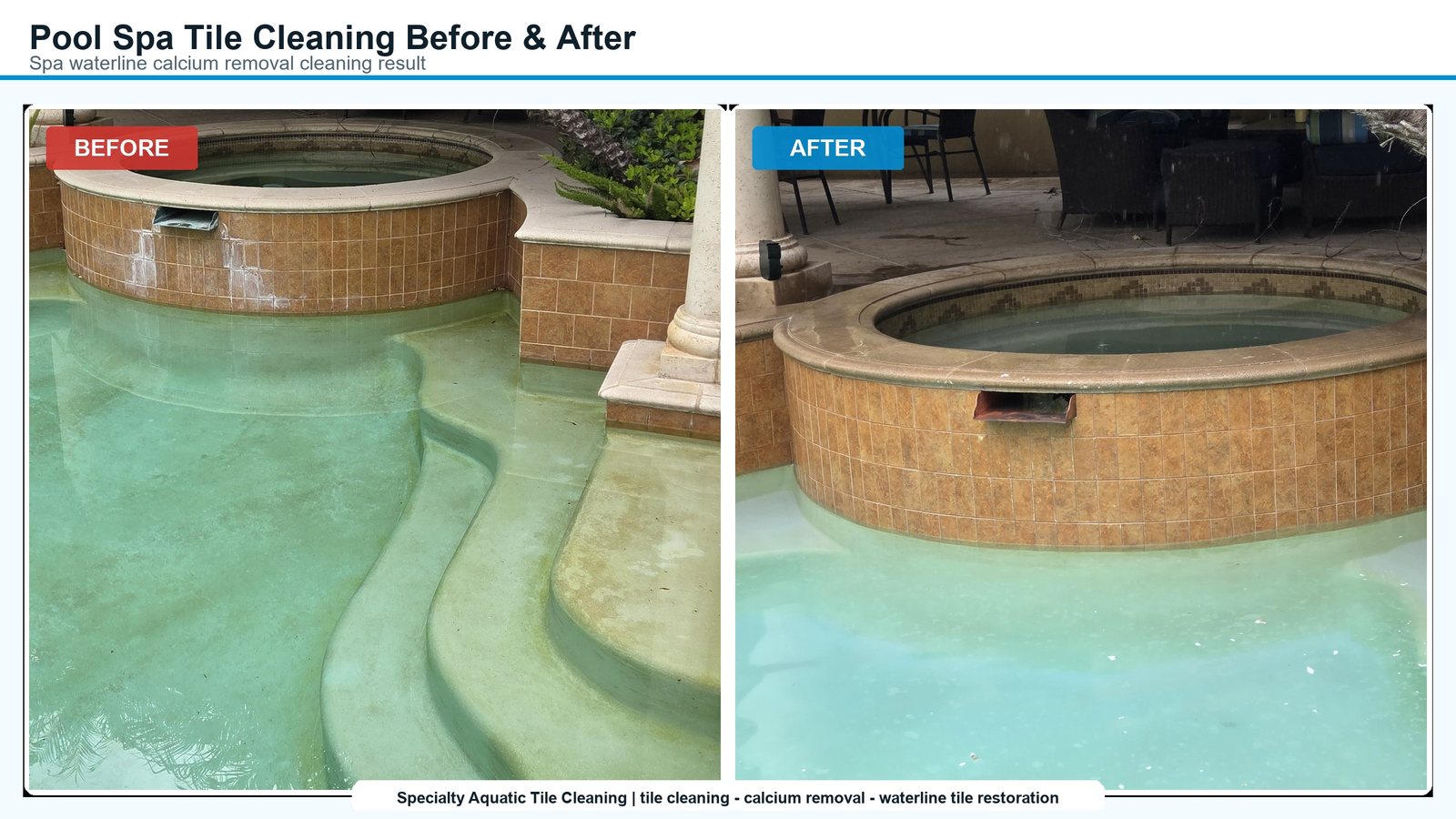
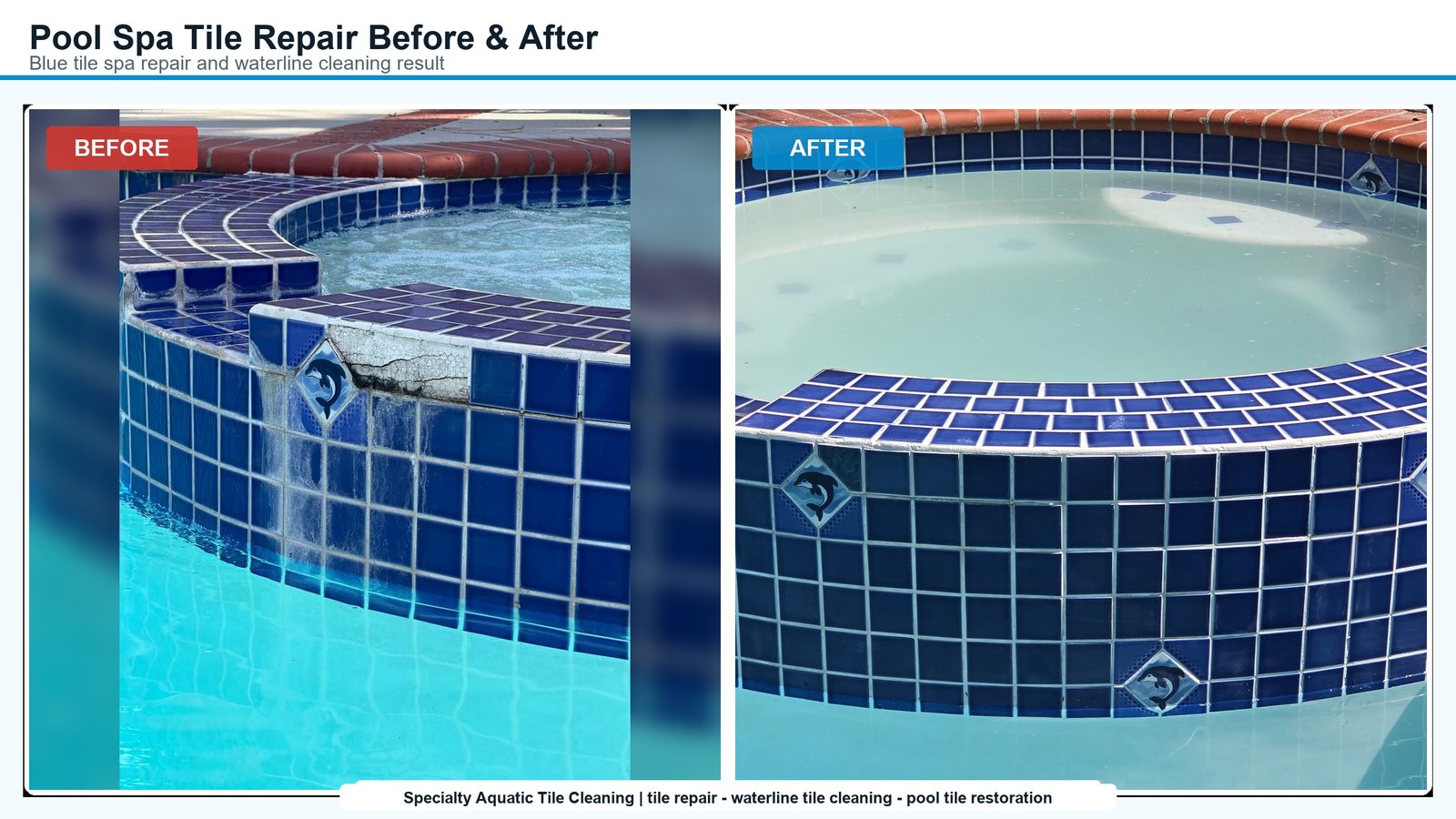
Cleaning and tile repair are different jobs
These two company project photos show separate services. They illustrate cleaning and repair results; they do not establish the cause of deposits on another pool.
Before you scrub, blast, or seal the area
Photograph the residue before disturbing it. Keep track of whether it appears after the spa runs, after rainfall, or after the surface dries. Do not pry at loose tiles or choose a stronger abrasive simply because the first cleaning did not last.
A proposed cleaner or coating needs to suit the specific tile, grout, and pool application. A sealer is not a substitute for identifying why deposits recur. Keep any product names and repair records so the person inspecting the pool knows what has already been applied.
Get a pool tile cleaning or repair estimate
Send these details to help us understand the job:
- A wide photo showing the pool, spa, spillway, or wall.
- Close photos of the white deposits and the surrounding grout.
- Photos of missing, cracked, or loose tiles without pulling on them.
- Your city, when the deposits appeared, and any cleaning or repair history.
Photos help start an estimate. A site visit may be needed to confirm the cause, access, tile condition, and repair scope. Pricing depends on the affected area, deposit severity, surface, and work required. See our pool tile cleaning cost guide for the factors involved.
Based in Duarte, we accept inquiries from nearby communities in the San Gabriel Valley and Los Angeles County. Check the service area and include your city when contacting us.
Show us what is happening on your tile.
Call or text 626-275-8959 to discuss cleaning, repair, and the next step.
Questions about white pool tile and grout buildup
Why is white buildup coming through my pool tile grout?
White deposits near grout may be surface scale, moisture-carried salts called efflorescence, or another residue. The deposit pattern, grout condition, water balance, and repair history need to be checked before choosing a treatment.
Is pool tile efflorescence the same as calcium scale?
They can look similar, and deposits may contain related minerals, but the source can differ. Pool-water scale forms on exposed surfaces; efflorescence involves dissolved salts traveling through cement-based materials with moisture. Both can occur in the same area.
Can pool tile efflorescence removal fix the cause?
Cleaning may remove the visible residue. It does not automatically correct a continuing moisture path, failed grout, loose tile, or another underlying problem. An inspection helps determine whether cleaning, repair, or further investigation is appropriate.
Does white grout buildup mean my pool has a leak?
No. White residue alone does not prove a leak. Recurring deposits, loose tile, cracks, or unexplained water loss are reasons to arrange an inspection rather than diagnose the problem from color alone.
Should damaged grout or loose pool tile be repaired before cleaning?
Have loose tile and damaged grout inspected before abrasive cleaning. Repair needs, tile stability, product cure times, and the cleaning method determine the order of work.
Can I get an estimate from photos of white pool tile buildup?
Photos can start the conversation. Send an overview, close views of the tile and grout, your city, and details about previous cleaning or repairs. An on-site inspection may be needed to confirm the cause and final scope.