Hard Fill Water Adds Minerals
Every time the pool is topped off, hard source water can add more calcium and dissolved minerals. Evaporation removes water, but the minerals stay behind.
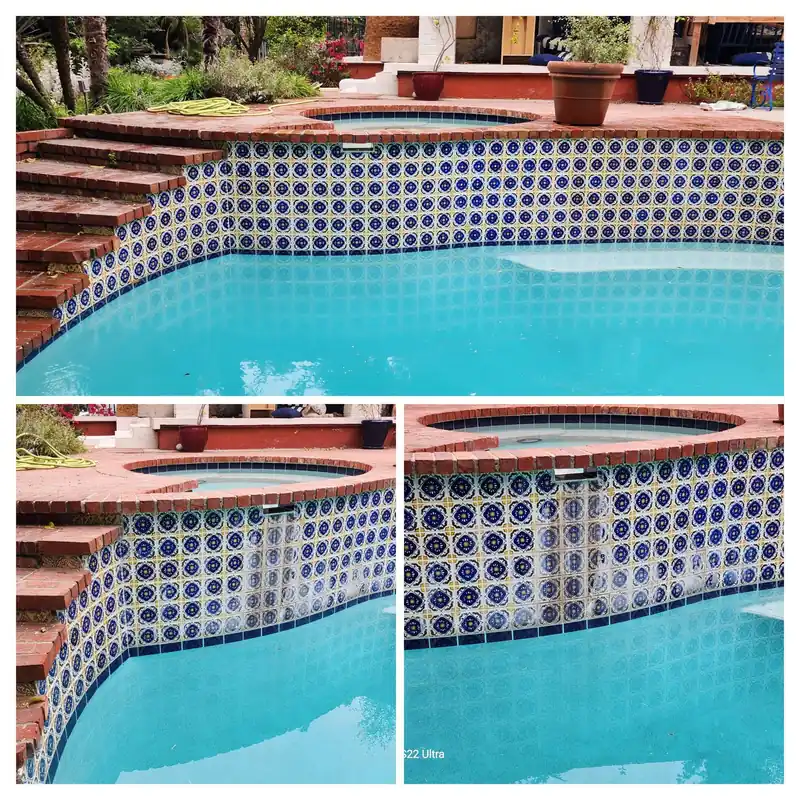
If the white ring returns after a professional cleaning, the cleaning usually did not fail. The pool is telling you the same water, heat, evaporation, and mineral conditions are still active.
Calcium comes back after pool tile cleaning when the water still has enough minerals, pH pressure, splash, sun, and evaporation to rebuild scale at the waterline. A clean tile surface gives you a fresh start, but it does not remove minerals from hard fill water or correct water chemistry by itself.
The goal after cleaning is not to make calcium impossible. The goal is to slow it down, keep it from bonding hard, and catch the next white line before it becomes thick scale again.
How to keep calcium from coming back after pool tile cleaning is the practical homeowner question this guide answers. It connects prevention, aftercare, water chemistry, and professional pool waterline scale removal in one place.
Most repeat calcium buildup comes from a handful of conditions that keep pushing minerals toward the tile waterline.
Every time the pool is topped off, hard source water can add more calcium and dissolved minerals. Evaporation removes water, but the minerals stay behind.
When pH or total alkalinity rises, calcium is more likely to come out of solution and attach to tile, grout, stone, spillways, and water feature edges.
Sun, wind, and heat leave a thin wet-dry zone at the tile. That zone is where mineral film often dries first and becomes the next white ring.
Raised spas, spillways, fountains, steps, and walls near returns get splashed, dried, and splashed again. That repeat cycle builds calcium faster than quiet areas.
Tile that still has etched areas, old coating, rough grout, or leftover haze can give new minerals a place to grab. That is why surface condition matters.
Light film is easier to manage than layered scale. Waiting until the buildup is thick can make removal slower, more expensive, and harder on delicate surfaces.
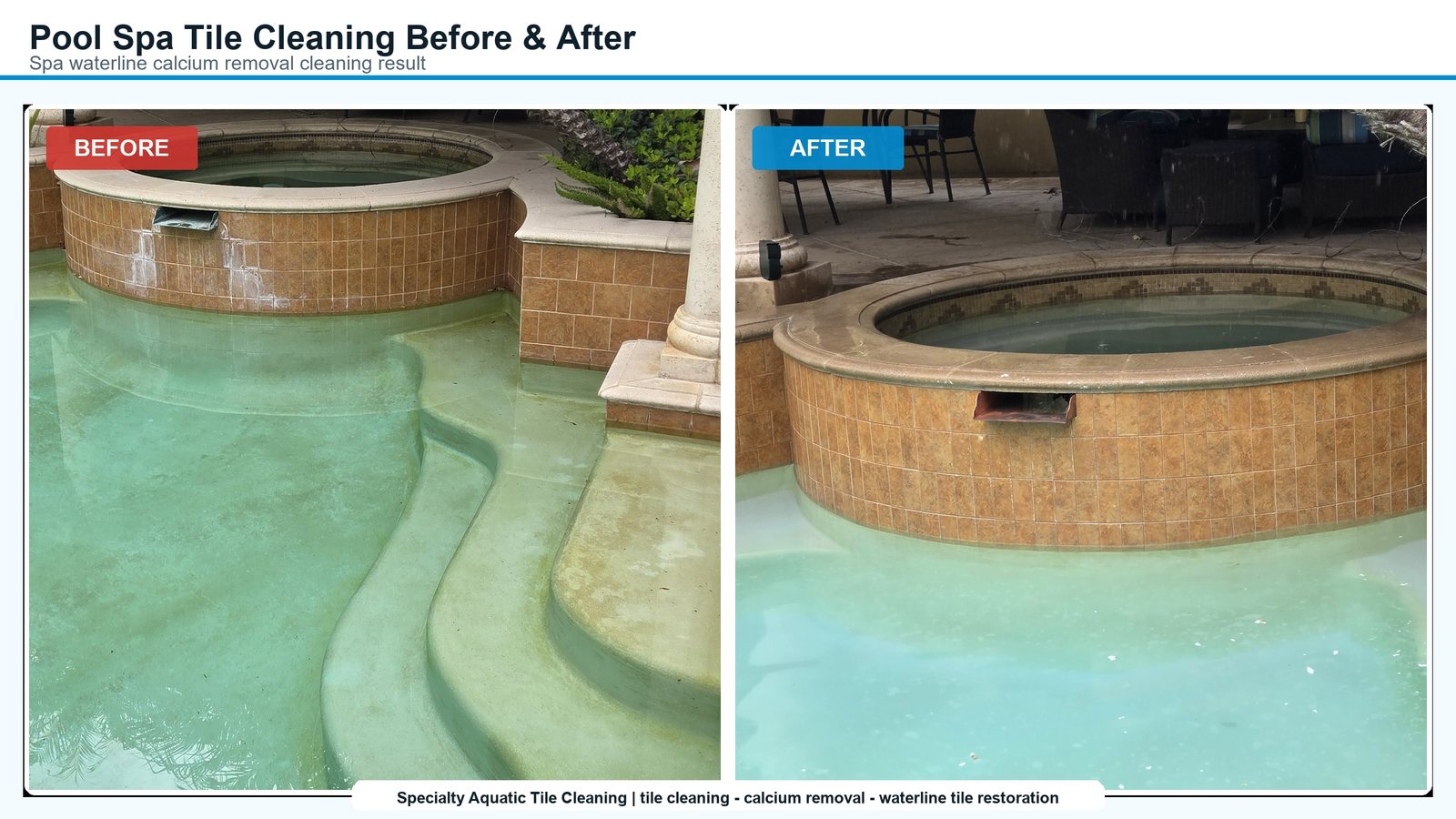
After cleaning, the most useful routine is simple and consistent. You are trying to keep minerals suspended in the water and remove light film before it bakes onto the tile.
| When | What to Do |
|---|---|
| Weekly | Test pH and alkalinity, then brush the waterline with a soft pool-safe brush. |
| After heat or wind | Check the water level and look for fresh white film on sunny walls, spillways, and spa tile. |
| Monthly | Review calcium hardness and fill-water behavior with your pool service or water testing routine. |
| When film appears | Handle it early. A quick professional check can prevent a small ring from becoming hard scale. |
Sealer does not change hard water, evaporation, pH, alkalinity, or calcium hardness. If it is applied over residue, moisture, old haze, or damaged grout, it can trap the problem and make later cleaning harder. Read the related guide: why sealer is bad for pool and spa tile.
The best time to ask for help is before the tile feels rough. Early service protects the surface and keeps the job smaller.
A faint line at the waterline is the first sign that minerals are drying on the tile again.
If the tile feels gritty or sandy, scale is bonding and should be checked before it builds layers.
If calcium comes back quickly, the water chemistry, fill water, or high-evaporation areas need closer attention.
Calcium returns when hard water, high calcium hardness, pH or alkalinity drift, evaporation, and splash-out keep pushing minerals back to the waterline.
In harsh conditions, light film can return in weeks. Balanced water and early brushing can slow the buildup and keep the waterline cleaner longer.
No. Sealer does not correct the water chemistry that causes scale. It can also trap haze or residue if the surface is not clean and stable.
Keep water balanced, brush the waterline gently, watch high-splash areas, and schedule help before the next white ring becomes thick scale.
Yes. Hard fill water adds minerals, and evaporation leaves those minerals behind on tile, grout, stone, and spillways.
Schedule when the buildup is visible but still light. Early maintenance is usually easier on the tile than waiting for heavy calcium deposits.
These pages help with estimates, cost, service areas, surfaces, and safer cleaning methods.
If calcium is starting to return, send a few clear photos of the pool tile, spa, spillway, or water feature. Specialty Aquatic Tile Cleaning can help you decide whether it is time for service or simple aftercare.